PHQ‑2: Patient Health Questionnaire‑2
The PHQ‑2 assessment is a rapid screening tool for depressive symptoms. Answer two questions to see if further evaluation with the PHQ‑9 or a clinical interview is recommended.
PHQ-2 Questionnaire Explained: A Brief Depression Screener
The Patient Health Questionnaire‑2 (PHQ‑2) consists of the first two questions of the PHQ‑9 and asks about depressed mood and loss of interest or pleasure over the past two weeks. The PHQ‑2 serves as a quick “first‑step” screening tool for depression. If you answer “not at all” to both questions, no further action may be necessary. If you respond affirmatively to either item, the full PHQ‑9 or a clinical interview should follow.
Evidence & validation: Research demonstrates that a total score of 3 or greater on the PHQ‑2 is the optimal cut‑off for identifying major depressive disorder. In one study, a score of 3 had 82.9% sensitivity and 90% specificity for major depression. Although the PHQ‑2 has sensitivity comparable to the PHQ‑9, it has slightly lower specificity. A positive result is therefore a signal to complete the PHQ‑9 or arrange a clinical evaluation to determine diagnosis and severity.
Why use it? Depression is common yet under‑diagnosed. The PHQ‑2 offers a rapid, easy‑to‑administer screener that can be used in busy clinical settings, online assessments, or self‑checks. It is publicly available and free of charge, and is recommended by guidelines for adults and adolescents aged 12 and older. Because it takes less than a minute to complete, it is ideal for initial screening in primary care, behavioral health, obstetrics, and research settings.
Alternatives: A positive PHQ‑2 should be followed by the PHQ‑9, which provides a more comprehensive assessment and severity score. Other validated instruments include the Edinburgh Postnatal Depression Scale for perinatal screening, the Geriatric Depression Scale for older adults, and the Beck Depression Inventory. These tools may be more appropriate in certain populations.
Important disclaimer: The PHQ‑2 is a screening tool and cannot diagnose depression. A positive screen should always be followed by further assessment. If you have thoughts of self‑harm or suicide, seek professional help immediately. In the U.S., call the 988 Suicide & Crisis Lifeline.
Reference: View the PHQ‑2 scoring guidelines from the University of Washington’s National HIV Curriculum and the PHQ‑2/PHQ‑9 instructions from the instrument developers.
Ready to Begin?
This assessment takes about <1 min to complete. Your responses are private, never stored, and you can instantly download your results as a PDF.
How to Take the PHQ-2 Depression Screener Online
Answer Questions
Complete the assessment honestly based on how you've been feeling
Get Your Score
Instant calculation using clinically validated scoring methods
Download PDF
Save or share your detailed results with your provider
You'll answer two questions about how often you've been bothered by (1) little interest or pleasure in doing things and (2) feeling down, depressed or hopeless over the past two weeks. Each response is scored from 0 (Not at all) to 3 (Nearly every day). The total score ranges from 0 to 6. Completing the PHQ‑2 typically takes less than a minute.
PHQ-2 Scoring Guidelines and Interpretation
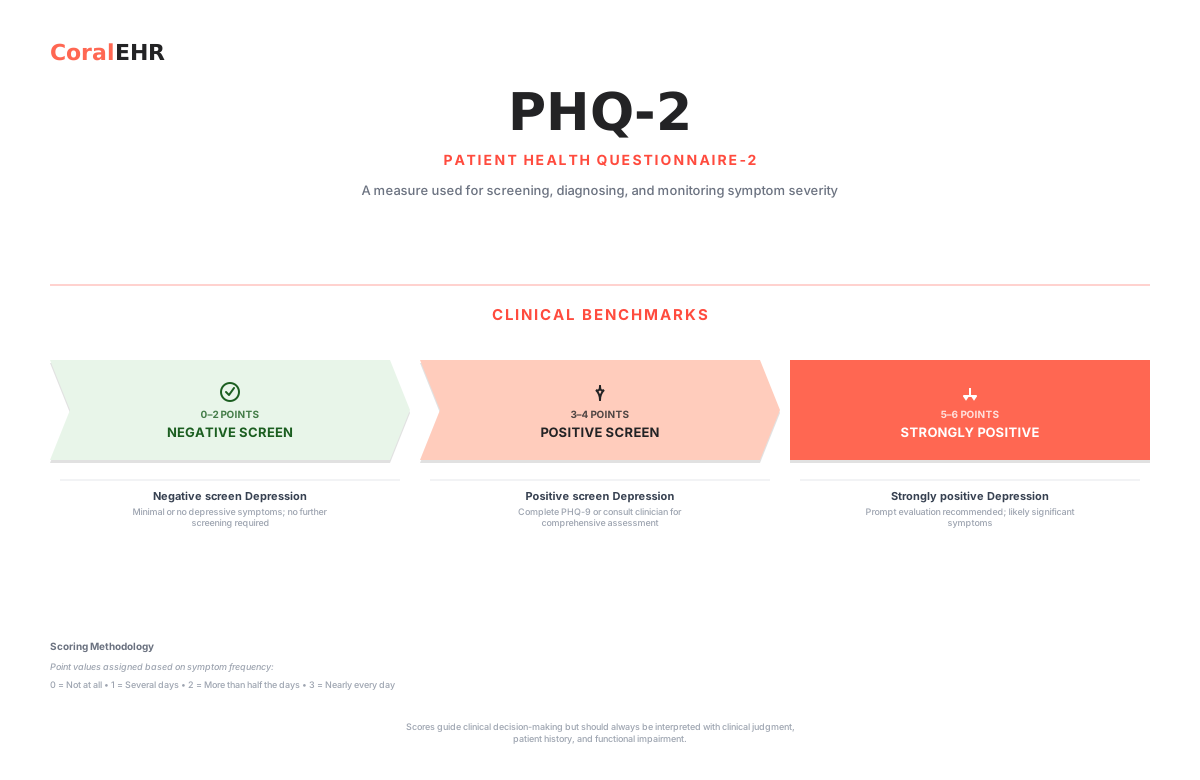
Quick Reference Table:
| Score | Interpretation | Recommended Action |
|---|---|---|
| 0–2 | Negative screen | Monitor periodically; no immediate action needed |
| 3–4 | Positive screen | Complete PHQ-9 or consult clinician |
| 5–6 | Strongly positive | Prompt evaluation recommended |
0–2 (Negative screen): Your responses suggest minimal or no depressive symptoms. No further screening is required unless clinically indicated. Continue to monitor your mood and repeat the PHQ‑2 periodically.
3–6 (Positive screen): A score of 3 or greater is considered a positive screen for depression. This does not mean you have major depression, but it indicates that a comprehensive assessment is warranted. You should complete the PHQ‑9 or speak with a healthcare provider to determine whether you meet the criteria for a depressive disorder. Higher scores (5–6) may indicate more significant symptoms and the need for prompt evaluation.
Using your results: A negative screen can reassure you that depression is unlikely. A positive screen is a starting point for further evaluation. You can download or print your responses to share with your clinician. Remember that the PHQ‑2 is a screening tool and not a diagnosis.
Crisis support: If you have thoughts of self-harm or suicide, seek immediate help. Call the 988 Suicide & Crisis Lifeline or go to your nearest emergency room.
Frequently Asked Questions
Common questions about the PHQ‑2 assessment.


Stay Updated on Mental Health Resources
Get notified when we add new assessments, research insights, and mental health resources.