PSS-10: Perceived Stress Scale (10-Item Version)
The PSS-10 is the most widely used stress assessment globally. Answer 10 questions about the past month to measure your perceived stress level with instant results.
PSS-10 Perceived Stress Scale: The Gold Standard for Measuring Stress
The Perceived Stress Scale (PSS-10) is the most widely used psychological instrument for measuring perceived stress. Developed by Dr. Sheldon Cohen and colleagues in 1983, it assesses the degree to which situations in your life are appraised as stressful over the past month. Unlike event-based stress measures, the PSS captures how unpredictable, uncontrollable, and overloaded you perceive your life to be.
Why the PSS-10 matters: Stress is a universal experience, but chronic elevated stress is linked to serious health consequences including cardiovascular disease, weakened immune function, anxiety, depression, and accelerated aging. The PSS-10 provides an objective way to quantify stress, making it invaluable for tracking changes over time and measuring the effectiveness of stress-reduction interventions.
Evidence & validation: The PSS-10 demonstrates excellent psychometric properties with Cronbach's alpha of 0.85-0.91 across studies, indicating strong internal consistency. Test-retest reliability ranges from 0.55-0.85 over 3-month intervals. The scale has been validated in dozens of countries and translated into approximately 40 languages. Research shows the PSS-10 outperforms both the longer 14-item and shorter 4-item versions.
Clinical applications: The PSS-10 is widely used in private practice to help clients understand their stress levels, track therapy progress, and demonstrate treatment outcomes. It's particularly valuable for high-achieving professionals dealing with work stress, burnout, and life transitions. Many therapists administer it at intake and periodically throughout treatment.
Two subscales: The PSS-10 measures two distinct factors: Perceived Helplessness (items 1, 2, 3, 6, 9, 10) reflects feelings of being overwhelmed and unable to cope, while Perceived Self-Efficacy (items 4, 5, 7, 8) measures confidence in handling problems and controlling life events.
Important disclaimer: The PSS-10 is a self-report measure of perceived stress, not a diagnostic instrument. It cannot diagnose stress-related disorders. If your score indicates high stress or you're struggling to cope, consult a mental health professional. For crisis support in the U.S., call the 988 Suicide & Crisis Lifeline.
Reference: Cohen, S., Kamarck, T., & Mermelstein, R. (1983). A global measure of perceived stress. Journal of Health and Social Behavior, 24, 385-396.
Ready to Begin?
This assessment takes about 3-5 min to complete. Your responses are private, never stored, and you can instantly download your results as a PDF.
How to Take the PSS-10 Stress Assessment Online
Answer Questions
Complete the assessment honestly based on how you've been feeling
Get Your Score
Instant calculation using clinically validated scoring methods
Download PDF
Save or share your detailed results with your provider
You'll answer 10 questions about how often you've experienced specific thoughts and feelings during the past month. Each response is scored from 0 (Never) to 4 (Very often), producing a total score between 0 and 40.
The PSS-10 asks about:
- Feeling upset by unexpected events
- Feeling unable to control important things
- Feeling nervous and stressed
- Confidence in handling personal problems
- Feeling things are going your way
- Inability to cope with demands
- Ability to control irritations
- Feeling on top of things
- Anger at things outside your control
- Difficulties piling up
Scoring note: Four items (4, 5, 7, 8) ask about positive experiences and are reverse-scored. This balanced approach captures both stress vulnerability and coping resources.
Most people complete the assessment in 3-5 minutes.
PSS-10 Scoring Guidelines and Clinical Interpretation
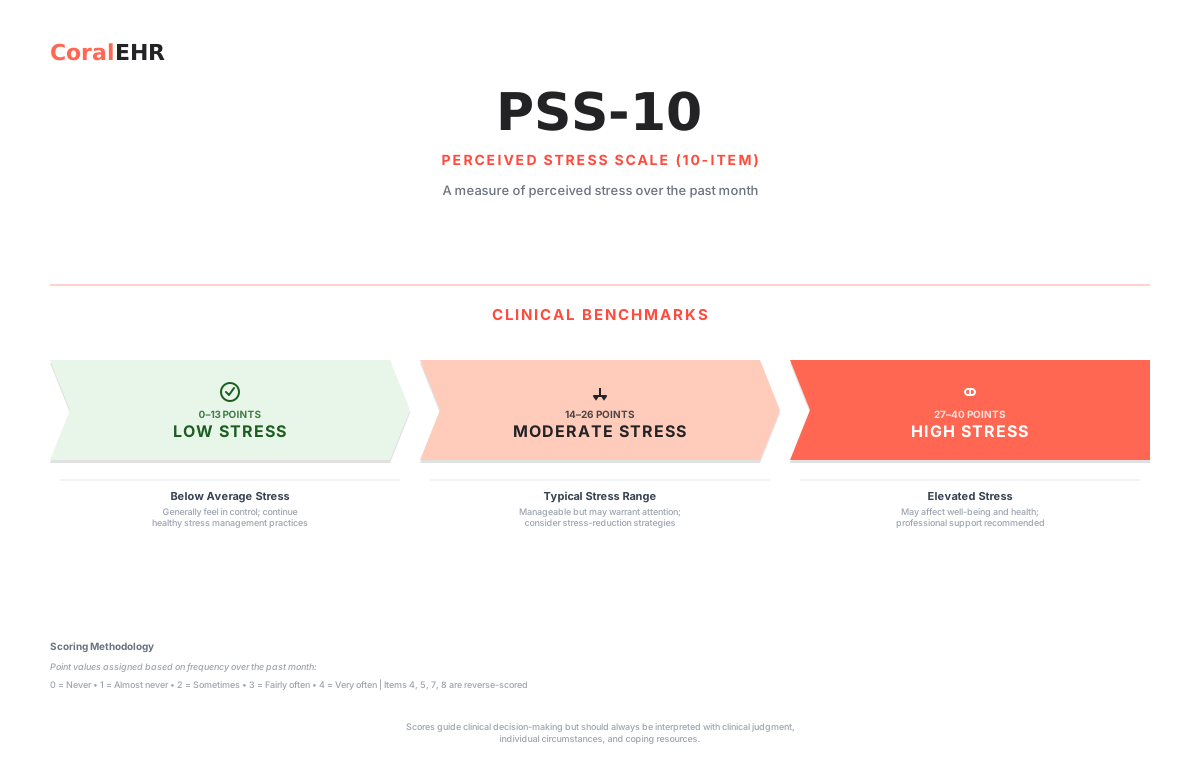
0-13 (Low Stress): Your perceived stress level is below average. You generally feel in control of your life and able to handle challenges effectively. Continue practicing healthy stress management strategies.
14-26 (Moderate Stress): Your stress level falls within the typical range for adults. While manageable, consider whether specific areas of life need attention. Stress-reduction techniques like mindfulness, exercise, or time management may be beneficial.
27-40 (High Stress): Your perceived stress level is elevated and may be affecting your well-being, relationships, or work performance. Professional support from a therapist or counselor is recommended. High scores are associated with poorer health outcomes and reduced immune function.
Important context: The PSS-10 was designed for comparison within populations, not as a diagnostic tool. Scores should be interpreted alongside your specific circumstances, coping resources, and current life demands. A temporarily elevated score during a major life transition may be expected, while persistently high scores warrant attention.
Subscale insights:
- Perceived Helplessness (items 1, 2, 3, 6, 9, 10): Higher scores suggest feeling overwhelmed and lacking control
- Perceived Self-Efficacy (items 4, 5, 7, 8): Higher scores indicate greater confidence in coping abilities
Tracking progress: The PSS-10 is ideal for monitoring changes over time. A decrease of 5+ points typically represents meaningful improvement. Consider retaking monthly or after implementing stress-management interventions.
Frequently Asked Questions
Common questions about the PSS-10 assessment.


Stay Updated on Mental Health Resources
Get notified when we add new assessments, research insights, and mental health resources.