RSES: Rosenberg Self-Esteem Scale
The Rosenberg Self-Esteem Scale is the most widely used measure of global self-esteem. Answer 10 questions to assess your sense of self-worth with instant results.
Rosenberg Self-Esteem Scale: The Gold Standard for Measuring Self-Worth
The Rosenberg Self-Esteem Scale (RSES) is the most widely used measure of global self-esteem in psychology. Developed by sociologist Dr. Morris Rosenberg in 1965, this brief 10-item questionnaire assesses your overall sense of self-worth and self-acceptance. It has been used in thousands of research studies and remains the gold standard for measuring self-esteem across clinical, educational, and research settings.
What it measures: The RSES captures your "positive or negative attitude toward the self as a totality." Rather than measuring specific aspects of self-concept (like appearance or abilities), it assesses your overall feelings of self-worth and self-acceptance. This makes it particularly valuable for tracking changes in global self-esteem over time.
Evidence & validation: The RSES demonstrates excellent psychometric properties with Cronbach's alpha ranging from 0.77 to 0.88 across diverse samples. Test-retest reliability is consistently strong (0.82-0.88), indicating stable measurement over time. The scale has been validated across cultures, age groups, and clinical populations, appearing in over 50,000 published studies.
Clinical relevance: Research consistently links low self-esteem to depression, anxiety, and psychological distress. Importantly, low self-esteem prospectively predicts later depressive symptoms, independent of prior mood states. This makes tracking self-esteem valuable for identifying vulnerability and measuring treatment progress.
Why therapists use it: The RSES is ideal for private practice because it's quick (2-3 minutes), free to use, and sensitive to change. Many therapists administer it at intake and periodically throughout treatment to demonstrate progress. Clients often find it validating to see their self-esteem improve over the course of therapy.
Important disclaimer: The RSES measures perceived self-esteem, not objective self-worth. Low scores don't mean you lack value—they indicate you're experiencing negative self-perception that therapy can address. If your score suggests low self-esteem, consider speaking with a mental health professional. In the U.S., call the 988 Suicide & Crisis Lifeline for support.
Reference: Rosenberg, M. (1965). Society and the Adolescent Self-Image. Princeton, NJ: Princeton University Press.
Ready to Begin?
This assessment takes about 2-3 min to complete. Your responses are private, never stored, and you can instantly download your results as a PDF.
How to Take the Rosenberg Self-Esteem Scale Online
Answer Questions
Complete the assessment honestly based on how you've been feeling
Get Your Score
Instant calculation using clinically validated scoring methods
Download PDF
Save or share your detailed results with your provider
You'll answer 10 statements about how you feel about yourself. For each statement, indicate how strongly you agree or disagree on a 4-point scale:
- Strongly Agree
- Agree
- Disagree
- Strongly Disagree
The RSES includes statements like:
- "On the whole, I am satisfied with myself"
- "I feel that I have a number of good qualities"
- "I am able to do things as well as most other people"
- "I take a positive attitude toward myself"
Scoring note: Five items are worded positively (agreeing indicates higher self-esteem) and five are worded negatively (agreeing indicates lower self-esteem). The negative items are automatically reverse-scored so that higher total scores always indicate higher self-esteem.
Total scores range from 0 to 30, with higher scores indicating greater self-esteem. Most people complete the assessment in 2-3 minutes.
RSES Scoring Guidelines and Clinical Interpretation
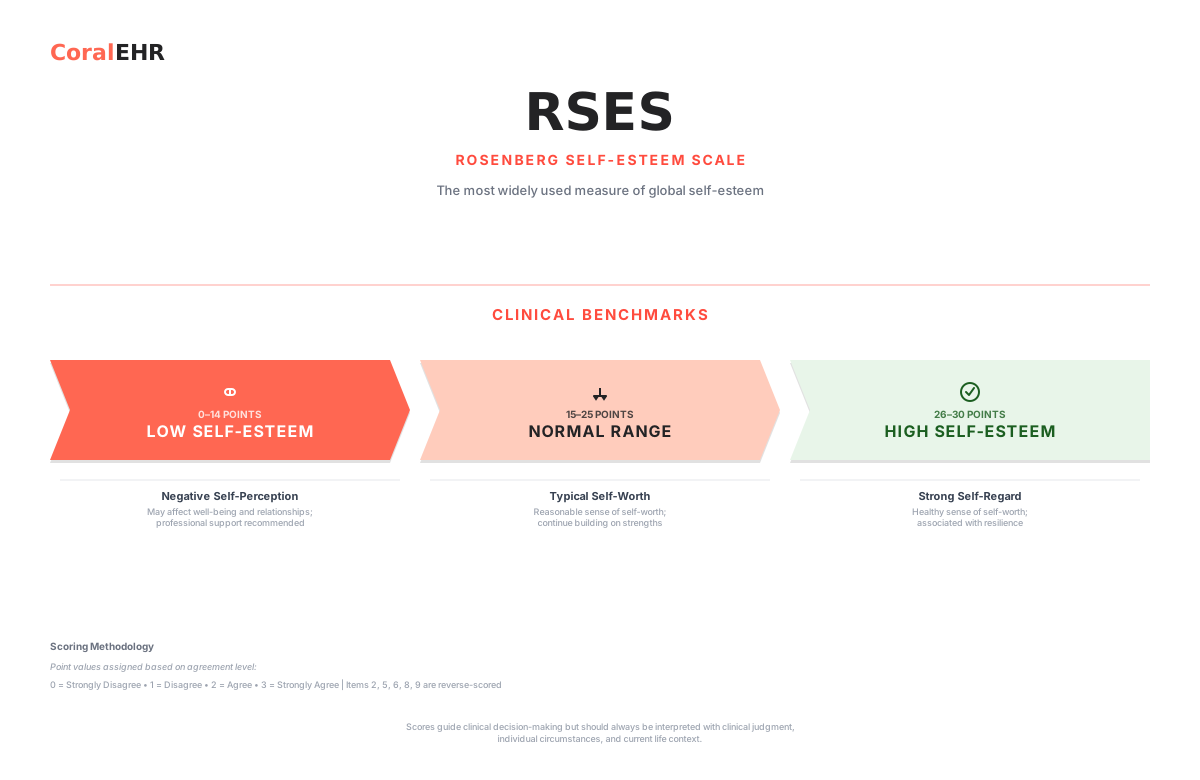
0-14 (Low Self-Esteem): Your score suggests you may be experiencing significant negative self-perception. Low self-esteem can affect mood, relationships, and overall quality of life. Professional support from a therapist can help you develop a more balanced and compassionate view of yourself.
15-25 (Normal Range): Your self-esteem falls within the typical range for adults. While you may have areas of self-doubt (which is normal), you generally maintain a reasonable sense of self-worth. Continue practicing self-compassion and building on your strengths.
26-30 (High Self-Esteem): Your score indicates strong self-esteem and positive self-regard. You appear to have a healthy sense of your own worth and value. High self-esteem is associated with resilience, better relationships, and psychological well-being.
Important context: Self-esteem naturally fluctuates based on life circumstances. A temporarily lower score during a difficult period doesn't define your worth. The RSES is most valuable when used to track changes over time rather than as a single diagnostic measure.
Using your results: If you're working with a therapist, share your score to inform treatment planning. Retaking the RSES every 4-6 weeks can help track progress and demonstrate the impact of therapy on your self-perception.
What affects self-esteem: Self-esteem is shaped by early experiences, relationships, achievements, and how we interpret life events. Cognitive-behavioral therapy, self-compassion practices, and addressing underlying depression or anxiety can all improve self-esteem over time.
Frequently Asked Questions
Common questions about the RSES assessment.


Stay Updated on Mental Health Resources
Get notified when we add new assessments, research insights, and mental health resources.