SWLS: Satisfaction with Life Scale
The SWLS is the most widely used measure of life satisfaction. Answer just 5 questions to assess your overall satisfaction with life and track changes over time.
Satisfaction with Life Scale: Measure Your Overall Life Satisfaction
The Satisfaction with Life Scale (SWLS) is the most widely used measure of global life satisfaction in psychology. Developed by Ed Diener and colleagues in 1985, this brief 5-item questionnaire assesses your overall cognitive judgment of satisfaction with your life as a whole. It takes just one minute to complete yet provides meaningful insight into your subjective well-being.
What it measures: The SWLS captures your conscious evaluative judgment of your life using your own criteria. Unlike measures that assess specific life domains (career, relationships, health), the SWLS allows you to integrate and weight these domains according to what matters most to you. It measures the cognitive rather than emotional component of well-being.
Evidence & validation: The SWLS demonstrates excellent psychometric properties with Cronbach's alpha of 0.79-0.89 and test-retest reliability of 0.82 over two months. It has been validated across dozens of nations, languages, age groups, and clinical populations. Scores correlate with other well-being measures and predict important outcomes including mental health and even suicide risk.
Why therapists love it: The SWLS is ideal for private practice because it's ultra-brief (1 minute), free to use, and highly sensitive to therapeutic change. Research shows scores increase during successful treatment, making it perfect for demonstrating therapy outcomes. A change of 3+ points represents clinically meaningful improvement.
Normative context: Non-clinical populations typically score between 23-28, reflecting slight to moderate satisfaction. Scores below 20 indicate dissatisfaction and warrant attention. The scale provides both absolute interpretation (what your score means) and relative comparison (how you compare to others).
Important disclaimer: The SWLS measures perceived life satisfaction, not objective life quality. Lower scores don't mean your life lacks value—they indicate you're experiencing dissatisfaction that therapy can address. If you score in the dissatisfied range, consider speaking with a mental health professional. In the U.S., call the 988 Suicide & Crisis Lifeline for support.
Reference: Diener, E., Emmons, R. A., Larsen, R. J., & Griffin, S. (1985). The Satisfaction with Life Scale. Journal of Personality Assessment, 49, 71-75.
Ready to Begin?
This assessment takes about 1-2 min to complete. Your responses are private, never stored, and you can instantly download your results as a PDF.
How to Take the Satisfaction with Life Scale Online
Answer Questions
Complete the assessment honestly based on how you've been feeling
Get Your Score
Instant calculation using clinically validated scoring methods
Download PDF
Save or share your detailed results with your provider
You'll respond to just 5 statements about your overall satisfaction with life. For each statement, indicate how much you agree or disagree on a 7-point scale:
- Strongly Disagree
- Disagree
- Slightly Disagree
- Neither Agree nor Disagree
- Slightly Agree
- Agree
- Strongly Agree
The SWLS asks about:
- Whether your life is close to your ideal
- The conditions of your life
- Your overall satisfaction with life
- Whether you've achieved important goals
- Whether you would change your life if you could
Scoring: Total scores range from 5 to 35, with higher scores indicating greater life satisfaction. A score of 20 represents the neutral point—equally satisfied and dissatisfied.
Most people complete the SWLS in about one minute.
SWLS Scoring Guidelines and Clinical Interpretation
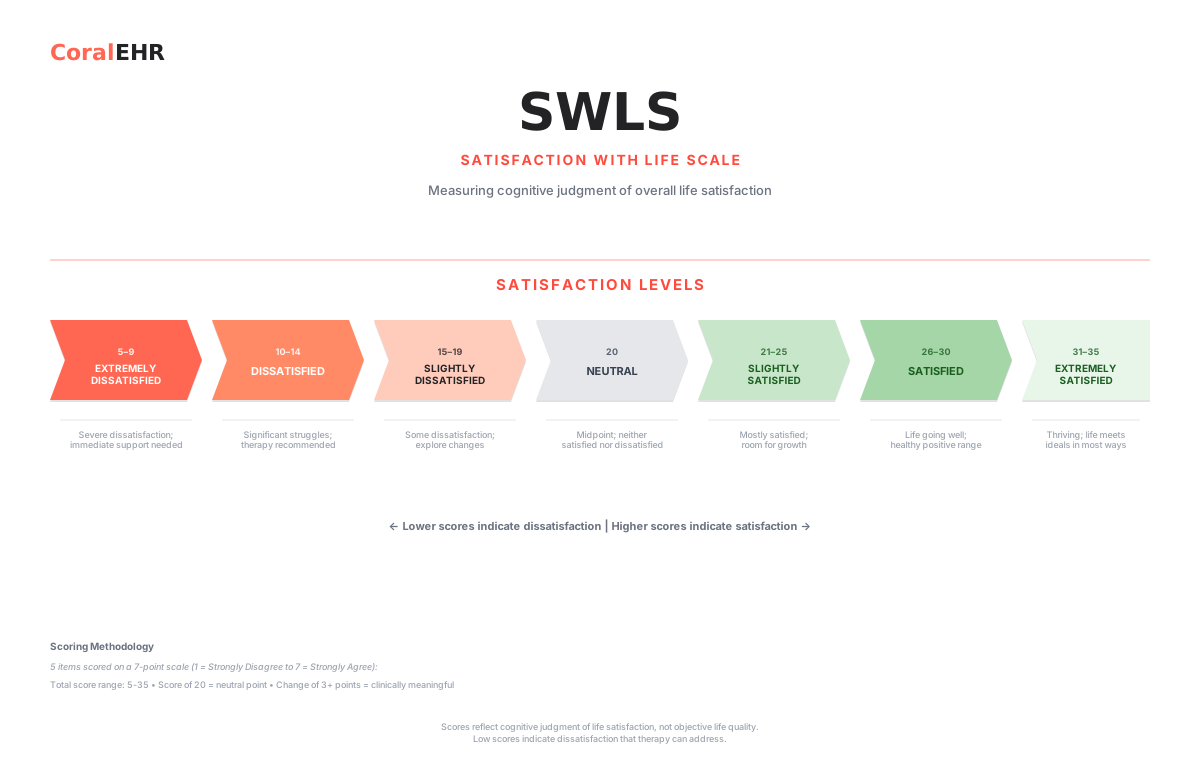
31-35 (Extremely Satisfied): You report high satisfaction with your life. You feel your life is going very well and meets your ideals in most important ways. This doesn't mean life is perfect, but you're thriving overall.
26-30 (Satisfied): You're generally satisfied with life. While there may be areas for improvement, you feel life is going well overall. This is a healthy, positive range.
21-25 (Slightly Satisfied): You're somewhat satisfied but see room for improvement. You may be doing well in some life areas while feeling less fulfilled in others. Consider what changes might increase your satisfaction.
20 (Neutral): You're at the midpoint—neither clearly satisfied nor dissatisfied. This may reflect ambivalence, transition, or mixed feelings about different life domains. It's worth exploring what would tip the balance toward greater satisfaction.
15-19 (Slightly Dissatisfied): You're experiencing some dissatisfaction with life. While not severely unhappy, you may benefit from examining what's missing and considering changes or professional support.
10-14 (Dissatisfied): You report significant dissatisfaction with your life. This level often indicates struggles in multiple life domains. Professional support from a therapist is recommended.
5-9 (Extremely Dissatisfied): You report severe dissatisfaction with life. This score warrants immediate attention and professional help. Please reach out to a mental health provider or crisis line.
Tracking progress: The SWLS is excellent for monitoring therapy outcomes. A change of 3 or more points represents clinically meaningful improvement. Consider retaking monthly to track your progress.
Frequently Asked Questions
Common questions about the SWLS assessment.


Stay Updated on Mental Health Resources
Get notified when we add new assessments, research insights, and mental health resources.