WHO-5: World Health Organization Five Well-Being Index
The WHO-5 is the most widely used measure of psychological well-being globally. Answer 5 questions about the past two weeks to assess your mental well-being with instant results.
WHO-5 Well-Being Index: The Global Standard for Measuring Well-Being
The WHO-5 Well-Being Index is the most widely used self-report measure of subjective psychological well-being in the world. Developed by the World Health Organization's Regional Office for Europe, this ultra-brief 5-item questionnaire assesses your mental well-being over the past two weeks. It has been translated into over 30 languages and validated across dozens of countries.
What it measures: The WHO-5 captures positive mood (cheerfulness, relaxation), vitality (feeling active and rested), and general interest in daily life. Unlike depression screeners that focus on symptoms, the WHO-5 measures the presence of positive well-being. This positive framing makes it acceptable to patients and reduces stigma around mental health screening.
Evidence & validation: The WHO-5 demonstrates excellent psychometric properties with Cronbach's alpha of 0.81-0.90 across populations. Studies using item response theory have confirmed its unidimensional structure across 35 countries, explaining over 68% of variance. It shows strong convergent validity with depression measures (PHQ-9 r=-0.52, HADS-D r=-0.63).
Depression screening: Research shows the WHO-5 is a sensitive screening tool for depression, with sensitivity of 93% and specificity of 83% in identifying depressive disorders. A score of 50% or below (raw score 12 or less) indicates poor well-being warranting further evaluation. A score of 28% or below (raw score 7 or less) is strongly indicative of depression.
Why therapists love it: The WHO-5 is ideal for private practice because it's completely free (WHO copyright), ultra-brief (1 minute), positively worded (reduces client resistance), and sensitive to change. The percentage scoring (0-100) is intuitive for clients and makes progress easy to visualize.
Important disclaimer: The WHO-5 measures subjective well-being, not clinical diagnoses. Low scores suggest the need for further evaluation but do not diagnose depression or other conditions. If your score indicates poor well-being, please consult a mental health professional. In the U.S., call the 988 Suicide & Crisis Lifeline for support.
Reference: World Health Organization. (1998). Wellbeing Measures in Primary Health Care/The Depcare Project. WHO Regional Office for Europe: Copenhagen.
Ready to Begin?
This assessment takes about 1-2 min to complete. Your responses are private, never stored, and you can instantly download your results as a PDF.
How to Take the WHO-5 Well-Being Index Online
Answer Questions
Complete the assessment honestly based on how you've been feeling
Get Your Score
Instant calculation using clinically validated scoring methods
Download PDF
Save or share your detailed results with your provider
You'll respond to just 5 statements about how you've felt over the past two weeks. For each statement, indicate how often you've experienced that feeling on a 6-point scale:
- 5 - All of the time
- 4 - Most of the time
- 3 - More than half of the time
- 2 - Less than half of the time
- 1 - Some of the time
- 0 - At no time
The WHO-5 asks about:
- Feeling cheerful and in good spirits
- Feeling calm and relaxed
- Feeling active and vigorous
- Waking up fresh and rested
- Daily life filled with interesting things
Scoring: Raw scores range from 0 to 25. Multiply by 4 for a percentage score (0-100). Higher scores indicate better well-being. A score of 50% (raw 12.5) or below suggests poor well-being.
Most people complete the WHO-5 in about one minute.
WHO-5 Scoring Guidelines and Clinical Interpretation
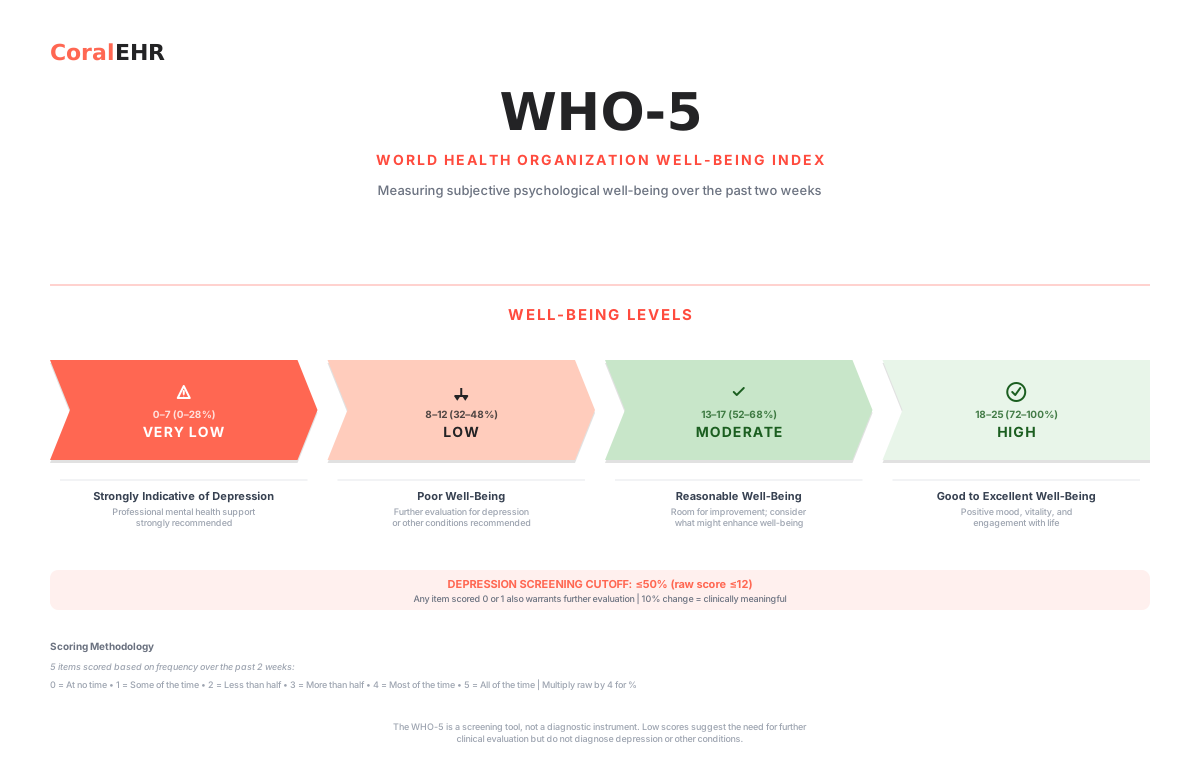
18-25 (72-100%): High Well-Being
Your score indicates good to excellent psychological well-being. You're experiencing positive mood, vitality, and engagement with life. Continue practicing habits that support your mental health.
13-17 (52-68%): Moderate Well-Being
Your well-being falls within a reasonable range. While not indicating significant problems, there may be room for improvement in some areas. Consider what changes might enhance your overall well-being.
8-12 (32-48%): Low Well-Being
Your score suggests poor psychological well-being. This level warrants further evaluation for depression or other conditions affecting your mental health. Speaking with a therapist or healthcare provider is recommended.
0-7 (0-28%): Very Low Well-Being
Your score indicates significantly impaired well-being and is strongly suggestive of depression. Professional mental health support is strongly recommended. Please reach out to a healthcare provider or mental health professional.
Percentage scoring: Multiply your raw score by 4 to get a percentage (0-100%). This makes it easy to track changes over time and communicate progress. For example, a raw score of 15 = 60%.
Tracking progress: The WHO-5 is excellent for monitoring therapy outcomes. A change of 10 percentage points (2.5 raw points) represents clinically meaningful improvement. Consider retaking every 2-4 weeks during treatment.
Depression screening: If any single item is scored 0 or 1, further evaluation for depression is recommended regardless of total score.
Frequently Asked Questions
Common questions about the WHO-5 assessment.


Stay Updated on Mental Health Resources
Get notified when we add new assessments, research insights, and mental health resources.