DASS-21: Depression Anxiety Stress Scales - 21 Item Version
The DASS-21 measures three related emotional states - depression, anxiety, and stress - in a single assessment. Get instant subscale scores with clinical severity levels.
Understanding the DASS-21: Depression, Anxiety, and Stress Scales
The Depression Anxiety Stress Scales - 21 Item Version (DASS-21) is a widely used self-report questionnaire designed to measure three related negative emotional states: depression, anxiety, and stress. Developed by psychologists S.H. Lovibond and P.F. Lovibond at the University of New South Wales, Australia, the DASS-21 has become one of the most popular mental health screening tools worldwide.
Why the DASS-21 is unique: Unlike single-construct measures such as the PHQ-9 (depression) or GAD-7 (anxiety), the DASS-21 captures all three emotional states in one assessment. This is clinically valuable because depression, anxiety, and stress frequently co-occur and share overlapping symptoms. The DASS-21 helps differentiate between these related but distinct conditions.
The three subscales measure:
- Depression: Dysphoria, hopelessness, devaluation of life, self-deprecation, lack of interest/involvement, anhedonia, and inertia
- Anxiety: Autonomic arousal, skeletal muscle effects, situational anxiety, and subjective experience of anxious affect
- Stress: Difficulty relaxing, nervous arousal, being easily upset/agitated, irritable/over-reactive, and impatient
Psychometric properties: The DASS-21 demonstrates excellent reliability with Cronbach's alpha of .93 for the total scale, .88 for depression, .82 for anxiety, and .90 for stress. Test-retest reliability over two weeks ranges from .71 to .89 across subscales. Confirmatory factor analysis supports the three-factor structure with strong model fit (CFI = 0.94).
Clinical applications: The DASS-21 is used in clinical practice, research, and community settings for:
- Initial screening and triage
- Treatment planning and goal-setting
- Progress monitoring during therapy
- Outcome measurement in research studies
- Population-level mental health surveillance
Important disclaimer: The DASS-21 is a screening tool, not a diagnostic instrument. Elevated scores indicate symptoms that warrant professional evaluation but do not constitute a clinical diagnosis. If you're experiencing severe symptoms or thoughts of self-harm, please contact the 988 Suicide & Crisis Lifeline immediately.
Reference: The DASS-21 is in the public domain and may be used freely for clinical and research purposes. Original publication: Lovibond, S.H. & Lovibond, P.F. (1995). Manual for the Depression Anxiety Stress Scales (2nd ed.). Sydney: Psychology Foundation of Australia.
Ready to Begin?
This assessment takes about 3-5 min to complete. Your responses are private, never stored, and you can instantly download your results as a PDF.
How to Take the DASS-21 Online
Answer Questions
Complete the assessment honestly based on how you've been feeling
Get Your Score
Instant calculation using clinically validated scoring methods
Download PDF
Save or share your detailed results with your provider
The DASS-21 contains 21 statements describing negative emotional symptoms. For each statement, you'll indicate how much it applied to you over the past week.
Response options (0-3 scale):
- 0 - Did not apply to me at all
- 1 - Applied to me to some degree, or some of the time
- 2 - Applied to me to a considerable degree, or a good part of the time
- 3 - Applied to me very much, or most of the time
The 21 items are distributed across three subscales:
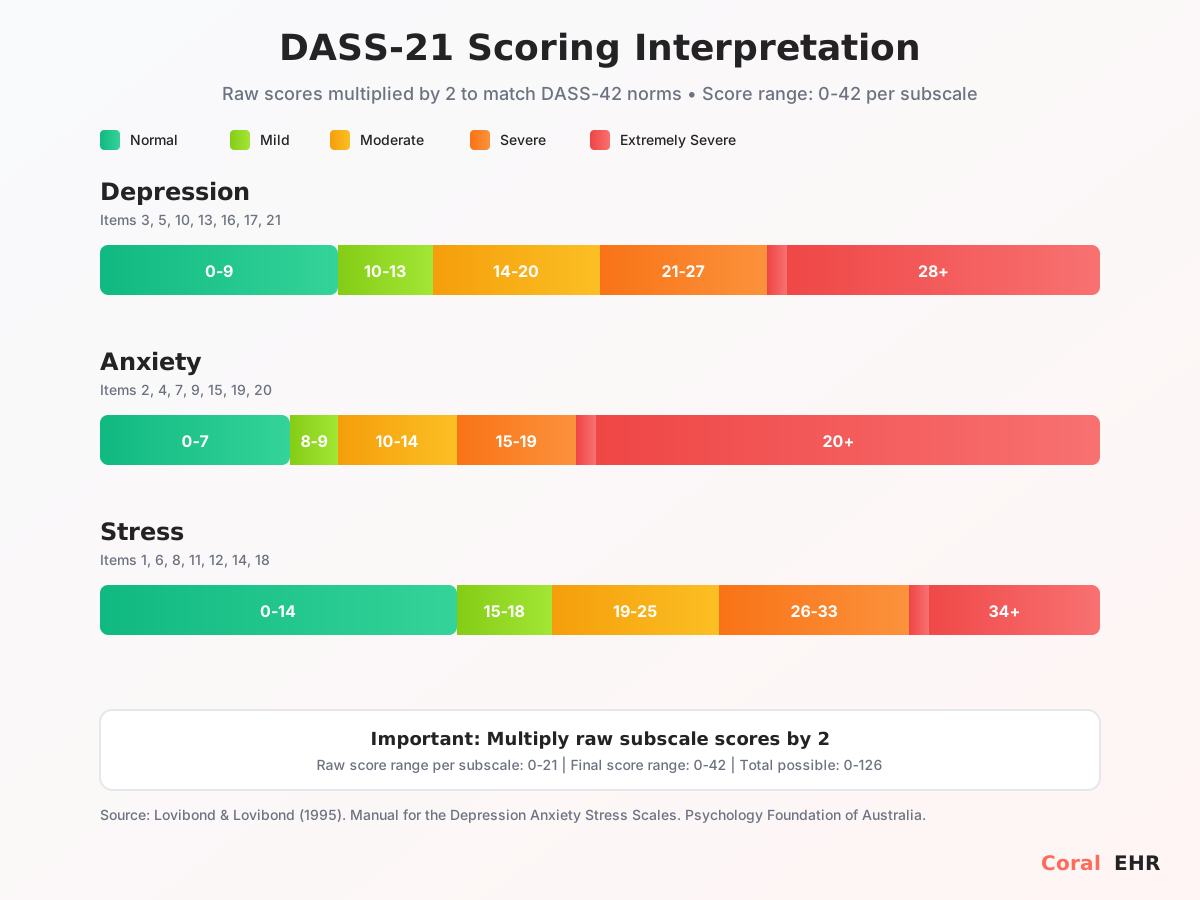
- Depression (7 items): Questions 3, 5, 10, 13, 16, 17, 21
- Anxiety (7 items): Questions 2, 4, 7, 9, 15, 19, 20
- Stress (7 items): Questions 1, 6, 8, 11, 12, 14, 18
Scoring: Raw subscale scores (0-21) are multiplied by 2 to yield final scores (0-42) that are comparable to the full 42-item DASS and published norms.
What you'll receive:
- Individual scores for Depression, Anxiety, and Stress
- Severity level for each subscale (Normal, Mild, Moderate, Severe, Extremely Severe)
- Overall interpretation and recommendations
- Downloadable PDF report for your records or to share with a healthcare provider
Most people complete the DASS-21 in 3-5 minutes.
DASS-21 Scoring and Clinical Interpretation
Scoring Overview:
Each subscale raw score (0-21) is multiplied by 2 to produce a final score (0-42). This ensures compatibility with the original 42-item DASS norms and published research.
Depression Subscale (Score x 2):
| Severity | Score Range | Interpretation |
|---|---|---|
| Normal | 0-9 | Depression symptoms within normal range |
| Mild | 10-13 | Mild depression symptoms present |
| Moderate | 14-20 | Moderate depression - consider professional support |
| Severe | 21-27 | Severe depression - professional evaluation recommended |
| Extremely Severe | 28+ | Extremely severe depression - urgent professional help needed |
Anxiety Subscale (Score x 2):
| Severity | Score Range | Interpretation |
|---|---|---|
| Normal | 0-7 | Anxiety symptoms within normal range |
| Mild | 8-9 | Mild anxiety symptoms present |
| Moderate | 10-14 | Moderate anxiety - consider professional support |
| Severe | 15-19 | Severe anxiety - professional evaluation recommended |
| Extremely Severe | 20+ | Extremely severe anxiety - urgent professional help needed |
Stress Subscale (Score x 2):
| Severity | Score Range | Interpretation |
|---|---|---|
| Normal | 0-14 | Stress levels within normal range |
| Mild | 15-18 | Mild stress symptoms present |
| Moderate | 19-25 | Moderate stress - consider stress management strategies |
| Severe | 26-33 | Severe stress - professional support recommended |
| Extremely Severe | 34+ | Extremely severe stress - urgent intervention needed |
Interpreting your results:
The DASS-21 provides separate scores for each subscale because depression, anxiety, and stress are distinct (though related) constructs. You may score high on one subscale but normal on others, or have elevated scores across multiple domains.
- Single elevated subscale: Focus treatment on that specific area
- Multiple elevated subscales: Comprehensive evaluation recommended as conditions often co-occur
- All subscales elevated: Consider intensive treatment approach addressing all three domains
When to seek help: If any subscale falls in the Severe or Extremely Severe range, professional evaluation is strongly recommended. If you're experiencing thoughts of self-harm or suicide, please contact the 988 Suicide & Crisis Lifeline immediately.
Frequently Asked Questions
Common questions about the DASS-21 assessment.


Stay Updated on Mental Health Resources
Get notified when we add new assessments, research insights, and mental health resources.