Introduction: The Payment Model Decision Every Therapist Faces
One of the most consequential decisions a therapist in private practice will make is whether to accept insurance, operate as private pay only, or create a hybrid model. This choice affects everything from your income and caseload to your clinical autonomy and daily stress levels.
The landscape is shifting rapidly. According to Heard's 2025 Financial State of Private Practice Report, roughly half of outpatient mental health providers now operate independently, yet many remain uncertain about which payment method best aligns with their professional goals. Meanwhile, therapists are leaving insurance networks at accelerating rates—34% cite financial reasons, while 26% point to administrative burdens.
This guide breaks down the real numbers, weighs the pros and cons of each approach, and helps you make an informed decision for your unique practice situation.
The Financial Reality: Insurance vs Private Pay by the Numbers
Let's start with the data that matters most to your bottom line.
Average Reimbursement Comparison
According to Heard's 2025 report:
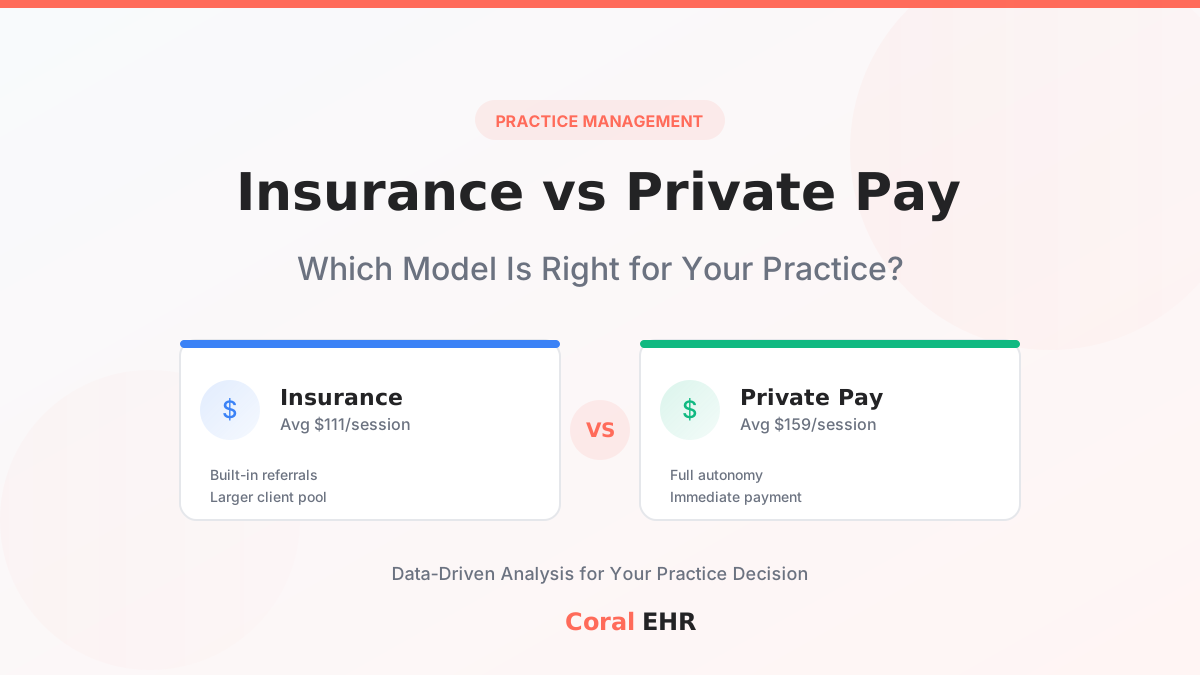
| Payment Model | Average Rate per Session |
|---|---|
| Private Pay | $159 |
| Insurance | $111 |
| Difference | 36% less from insurance |
For PhD-level psychologists, the gap widens further: those accepting insurance average $167.69 per session compared to $195.91 for private-pay-only practitioners.
The Caseload Math
To earn $100,000 annually working 48 weeks:
- Private pay at $159/session: 13 sessions per week
- Insurance at $111/session: 19 sessions per week
That's 6 additional sessions weekly—or roughly one extra full day of client work—to reach the same income on insurance.
Hidden Costs of Insurance
The $48 per-session difference doesn't tell the whole story. Insurance-based practices also face:
- Claim denial and resubmission time: 15-30 minutes per denied claim
- Pre-authorization requests: 10-20 minutes each
- Documentation requirements: Often more extensive than clinical necessity
- Payment delays: Typically 30-45 days, sometimes longer
- Clawbacks: Insurers can reclaim payments months or years later
Many therapists estimate administrative work adds 5-10 hours weekly when heavily insurance-dependent.
Pros and Cons of Taking Insurance
Advantages of Insurance Panels
1. Larger Client Pool
Insurance opens your practice to clients who couldn't otherwise afford therapy. Many potential clients filter therapist directories by "accepts my insurance" before considering other factors.
2. Built-In Referral System
Insurance panels provide visibility through their provider directories. For new practices, this can jumpstart caseload building without extensive marketing investment.
3. Increased Client Trust
Some clients perceive insurance-paneled therapists as more credible or established. Being "in-network" signals legitimacy to certain populations.
4. Predictable Payment Cycles
Despite lower rates, insurance payments tend to be consistent. Most insurers pay claims within 30 days, creating reliable (if slower) cash flow.
5. Lower Barrier to Entry for Clients
Clients with good insurance may pay only a $20-50 copay versus $150+ out of pocket. This affordability keeps clients in treatment longer.
Disadvantages of Insurance Panels
1. Significantly Lower Reimbursement
As shown above, you're earning 36% less per session on average. Over a career, this compounds into hundreds of thousands of dollars in lost income.
2. Administrative Burden
Pre-authorizations, claim submissions, denial appeals, and audits consume hours that could be spent with clients or building your practice.
3. Clinical Restrictions
Insurance companies may limit session frequency, require specific diagnoses, or mandate evidence-based treatments that don't fit every client. Some therapists report feeling like they're treating the insurance company's requirements rather than the client's needs.
4. Required Diagnoses
To bill insurance, you must provide a diagnosable mental health condition. This creates documentation that follows clients, potentially affecting their insurance rates or coverage for decades.
5. Audit and Clawback Risk
Insurance companies can audit your records years after service and demand repayment for sessions they deem improperly documented or unnecessary.
Pros and Cons of Private Pay (Cash-Only)
Advantages of Private Pay
1. Higher Per-Session Income
At $159 versus $111, each private-pay session earns you 43% more. With a smaller caseload, you can achieve the same income with better work-life balance.
2. Complete Clinical Autonomy
No pre-authorizations, no session limits, no mandated treatment approaches. You and your client decide what's clinically appropriate.
3. Enhanced Client Privacy
Without insurance involvement, no diagnosis is required. Session records stay between you and your client—no third-party access to sensitive mental health information.
4. Immediate Payment
Most private-pay therapists collect at time of service or via autopay. No waiting 30-45 days for reimbursement, no denied claims to chase.
5. Simpler Administration
No credentialing applications, no claim submissions, no authorization requests. Many private-pay therapists run their practices with minimal administrative support.
6. Niche Specialization
Private pay allows you to specialize without worrying whether insurance covers your approach. Relationship coaching, executive functioning support, life transitions—these may not fit diagnostic codes but serve real client needs.
Disadvantages of Private Pay
1. Smaller Client Pool
Many potential clients cannot afford $150-200+ per session, even if they need help. Going fully private pay means turning away people who could benefit from your services.
2. Marketing Required
Without insurance directory listings, you need to actively market your practice through SEO, social media, networking, or other channels. This takes time and money.
3. Economic Sensitivity
During recessions or personal financial hardships, private-pay clients are first to reduce therapy frequency or discontinue. Insurance provides more stability during downturns.
4. Perceived Accessibility Issues
Some clients view private-pay therapists as "luxury" providers, creating a perception barrier even among those who could afford your rates.
The Hybrid Model: Best of Both Worlds?
Many therapists find success with a hybrid approach—accepting insurance from some panels while maintaining private-pay slots.
Common Hybrid Strategies
The 60/40 Split
Many therapists maintain roughly 60% insurance clients and 40% private pay. This provides steady referrals while offsetting lower reimbursement rates with higher-paying clients.
Selective Panel Participation
Rather than joining every panel, accept only high-reimbursing insurers. Blue Cross Blue Shield networks typically pay better than Medicaid, for example. Two or three well-chosen panels can provide sufficient referrals without overwhelming administrative burden.
Service Differentiation
Some therapists accept insurance for standard individual therapy but offer private-pay-only services for couples work, intensives, or specialty approaches not covered by insurance.
Superbill Strategy
Operating as private pay while providing superbills lets clients seek out-of-network reimbursement themselves. You receive full payment immediately; clients may recover 50-80% from their insurer.
Hybrid Model Considerations
- Track your time and income by payer to identify which panels are worth keeping
- Set clear boundaries about how many insurance slots you'll maintain
- Review annually and don't hesitate to drop low-value panels
- Consider whether administrative complexity justifies the referral benefit
How to Decide: Key Questions for Your Practice
Before choosing your payment model, honestly assess these factors:
1. What Are Your Financial Goals?
If maximizing income is priority, private pay typically wins. If steady referrals matter more than per-session rate, insurance provides stability.
2. What Population Do You Want to Serve?
Some communities have higher private-pay potential (urban professionals, executives, tech workers). Others rely heavily on insurance (rural areas, lower-income communities). Match your model to your ideal client.
3. How Do You Feel About Administrative Work?
If billing and paperwork drain you, private pay eliminates most of that burden. If you have systems or staff to handle administration, insurance becomes more manageable.
4. What's Your Risk Tolerance?
Private pay requires confidence in your marketing abilities and tolerance for variable caseloads. Insurance provides steadier, if lower, income.
5. Where Are You in Your Career?
New therapists often benefit from insurance panel visibility while building reputation. Established therapists with full caseloads can more easily transition to private pay.
6. What's Your Specialty?
Some specialties (trauma, eating disorders, perinatal) have strong private-pay demand. Others (severe mental illness, crisis work) may require insurance to serve your population.
This article is for informational purposes only and does not constitute financial, legal, or business advice. Consult with appropriate professionals regarding your specific practice situation.
Take the Next Step
Whether you accept insurance or operate private pay, tracking client outcomes demonstrates your value and supports evidence-based practice:
- PHQ-9 Depression Screening - Track depression outcomes session-to-session
- GAD-7 Anxiety Assessment - Monitor anxiety treatment progress
- Why Therapists Are Leaving Insurance in 2026 - Understand the broader industry shift
- HIPAA Compliance Checklist - Ensure compliance regardless of payment model
Frequently Asked Questions
CoralEHR Team
CoralEHR Team