Adaptive Behavior Brief: Brief Adaptive Behavior Skills Assessment
Quick skills assessment covering communication, daily living, and social abilities with domain-level scoring.
Brief Adaptive Behavior Skills Assessment: Evaluating Functional Abilities
Overview: The Brief Adaptive Behavior Skills Checklist is a streamlined assessment tool designed to evaluate functional skills across three critical domains: Communication, Daily Living Skills, and Socialization.
Purpose: This checklist helps clinicians, educators, and caregivers identify skill strengths and areas for development in children and individuals requiring adaptive support. Results can inform individualized intervention planning and track progress over time.
Clinical Background: Adaptive behavior refers to the collection of conceptual, social, and practical skills that people learn and perform in their daily lives. This assessment aligns with evidence-based frameworks used in developmental and behavioral health settings.
Evidence & Validation: Skills checklists are widely used in ABA therapy, special education, and developmental assessments to establish baseline functioning and measure treatment outcomes.
Why Use It?
- Quick administration (5-10 minutes)
- Clear mastery criteria for each skill
- Domain-level scoring shows specific strengths/needs
- Free, HIPAA-compliant online format
- Instant PDF download for records
Disclaimer: This is a screening tool, not a comprehensive diagnostic assessment. Results should be interpreted by qualified professionals and used alongside clinical judgment and comprehensive evaluation when making treatment decisions.
Ready to Begin?
This assessment takes about 5-10 min to complete. Your responses are private, never stored, and you can instantly download your results as a PDF.
How to Complete the Brief Adaptive Behavior Skills Checklist
Answer Questions
Complete the assessment honestly based on how you've been feeling
Get Your Score
Instant calculation using clinically validated scoring methods
Download PDF
Save or share your detailed results with your provider
This checklist includes 12 skills across 3 domains (Communication, Daily Living, Socialization).
Response Format: For each skill, select whether it is "Mastered" (1 point) or "Not Mastered" (0 points).
Scoring Guidelines:
- Mastered (1): The individual performs the skill independently and consistently in everyday situations
- Not Mastered (0): The skill is emerging, requires assistance, or not yet present
Scoring Range: 0-12 total skills mastered
After Completion: You'll receive instant results showing:
- Total skills mastered (out of 12)
- Mastery percentage
- Breakdown by domain (Communication, Daily Living, Socialization)
- Breakdown by subdomain (6 categories)
- Professional PDF report for records
Understanding Your Skills Assessment Results
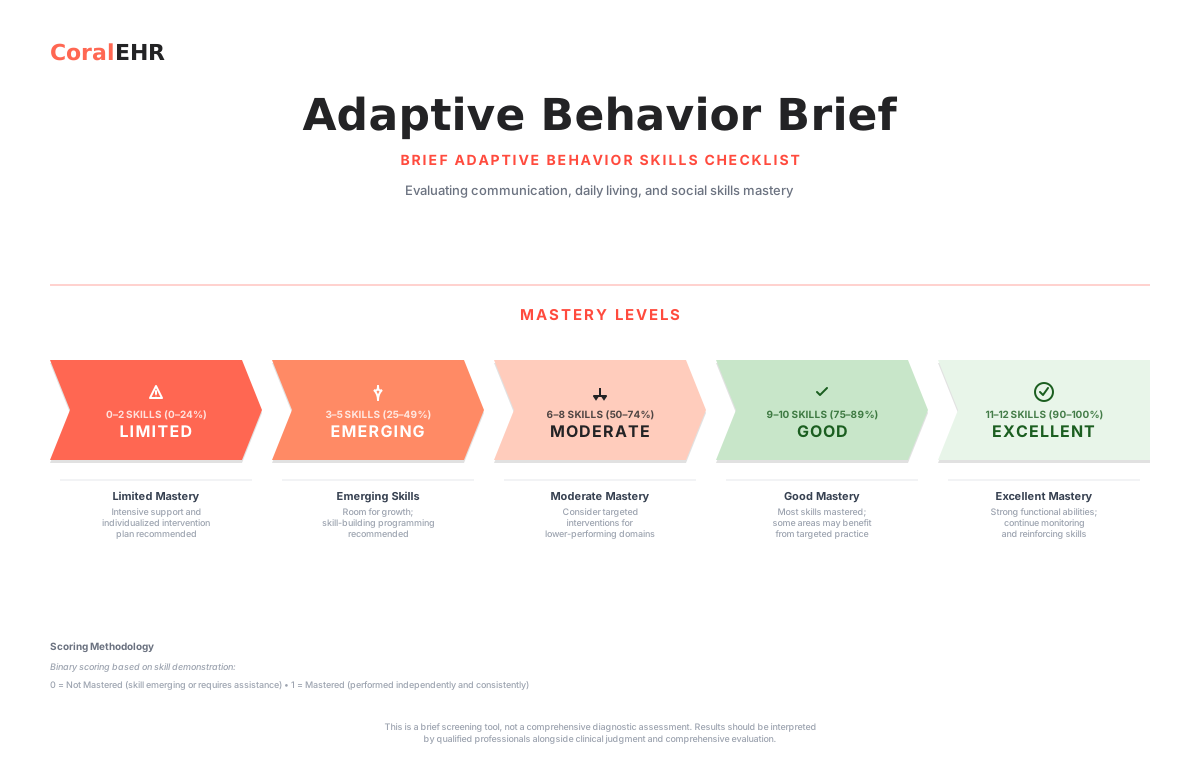
Results show the number and percentage of skills mastered in each domain:
Overall Mastery Levels:
- 90-100% (11-12 skills): Excellent skill mastery. Individual demonstrates strong functional abilities across assessed areas.
- 75-89% (9-10 skills): Good mastery in most areas. Some skills may benefit from targeted practice.
- 50-74% (6-8 skills): Moderate mastery. Consider interventions for lower-performing domains.
- 25-49% (3-5 skills): Emerging skills with room for growth. Skill-building programming recommended.
- 0-24% (0-2 skills): Limited mastery. Intensive support and individualized intervention plan strongly recommended.
Domain Scores: Pay attention to domain breakdowns to identify specific areas of strength or need:
- Communication: Receptive and expressive language abilities
- Daily Living Skills: Personal care and domestic/household tasks
- Socialization: Interpersonal relationships and play skills
Using Results:
- Identify priority skill targets for intervention
- Track progress over time with repeated assessments
- Share results with treatment team, educators, or caregivers
- Guide IEP/treatment plan development
Frequently Asked Questions
Common questions about the Adaptive Behavior Brief assessment.
- This assessment can be completed by parents, caregivers, teachers, therapists, or other professionals who are familiar with the individual's daily functioning. The rater should have regular opportunities to observe the individual performing these skills.
- For progress monitoring, reassess every 3-6 months or when significant skill changes are expected. More frequent assessment may be appropriate during intensive intervention periods.
- Rate as 'Not Mastered' if the skill is not performed independently and consistently. Emerging skills can be tracked separately in treatment plans and reassessed at follow-up.
- Yes. After completing the checklist, you can download results as a professional PDF report that includes total mastery scores, domain breakdowns, and clinical interpretation. This PDF can be shared with healthcare providers, educators, or kept for records.
- Your responses are processed entirely in your browser - nothing is transmitted to or stored on our servers, so no protected health information leaves your device. Note: HIPAA compliance is a property of an organization's policies and Business Associate Agreements, not of a website. Clinicians using this tool inside a practice should follow their EHR's HIPAA workflow.
- No. This is a brief screening checklist covering selected skills in three domains. Comprehensive assessments like the Vineland-3 or ABAS-3 cover broader skill ranges, provide standardized norm-referenced scores, and are administered by trained professionals. Use this tool for quick screening and progress monitoring, not formal diagnosis.


Stay Updated on Mental Health Resources
Get notified when we add new assessments, research insights, and mental health resources.