PHQ‑9: Patient Health Questionnaire‑9
Take the free PHQ‑9 depression test, answer nine Patient Health Questionnaire items, and get an instant severity score with guidance about what it means.
What Is the PHQ-9 Depression Test?
The Patient Health Questionnaire‑9 (PHQ‑9) is a 9-item depression screening and severity questionnaire. It asks how often symptoms have occurred over the past two weeks and produces a 0-27 score. Common PHQ‑9 severity bands are 5, 10, 15, and 20, but diagnosis requires clinical evaluation.
The PHQ‑9 is widely used in primary care, mental health clinics, and research settings because it is brief, easy to score, and useful for monitoring symptom change over time. Question 9 asks about thoughts of death or self-harm and should always be reviewed carefully with appropriate crisis support.
DSM-5 alignment: The nine PHQ-9 items parallel the symptom list used for major depression. That overlap does not make this page a diagnostic algorithm. A clinician still has to decide duration, impairment, and differential diagnosis. The official form also includes an unscored functioning item that this page does not score.
Evidence & validation: Research involving thousands of patients has shown that the PHQ‑9 is both reliable and valid. A score of 10 or greater has been found to have 88% sensitivity and 88% specificity for major depression. The tool's cut‑off scores (5, 10, 15 and 20) correspond to mild, moderate, moderately severe and severe depression.
Why use it? Depression affects millions of people around the globe, yet many go undiagnosed. The PHQ‑9 empowers you to reflect on your mental health and quantify your symptoms. Regular use can help you notice changes over time and facilitate discussions with healthcare professionals.
Alternatives: For rapid initial screening, healthcare providers sometimes use the PHQ‑2, which consists of the first two questions of the PHQ‑9. A positive PHQ‑2 should be followed by the full PHQ‑9. There are also other instruments such as the Beck Depression Inventory (BDI) and the Hamilton Rating Scale for Depression, but these often require administration by a clinician.
Important disclaimer: The PHQ‑9 is a screening tool. It cannot diagnose depression. If your responses indicate moderate or severe symptoms or you have any thoughts of self‑harm, seek professional help immediately. In the U.S., you can call the 988 Suicide & Crisis Lifeline.
Copyright: PHQ-9 is copyrighted by Pfizer Inc. (developed by Spitzer, Williams, and Kroenke). It may be reproduced and used without permission, but it is not public domain. Official stem: “Over the last 2 weeks, how often have you been bothered by any of the following problems?”
Reference: View the original PHQ-9 questionnaire (PDF) from the American Psychological Association.
Ready to Begin?
This assessment takes about 2-3 min to complete. Your responses are private, never stored, and you can instantly download your results as a PDF.
How to Take the PHQ-9 Depression Test Online
Answer Questions
Complete the assessment honestly based on how you've been feeling
Get Your Score
Instant calculation using clinically validated scoring methods
Download PDF
Save or share your detailed results with your provider
Official stem: Over the last 2 weeks, how often have you been bothered by each of the following. Each response is scored from 0 (Not at all) to 3 (Nearly every day). After completing the questionnaire, your responses are summed to produce a total score between 0 and 27. Higher scores mean more reported symptoms, not a diagnosis.
The PHQ‑9 covers core symptoms such as low mood, loss of interest, sleep and appetite changes, fatigue, concentration problems, feelings of guilt or worthlessness, psychomotor changes and suicidal thoughts. Completing the questionnaire typically takes just a couple of minutes.
PHQ-9 Scoring Guidelines and Clinical Interpretation
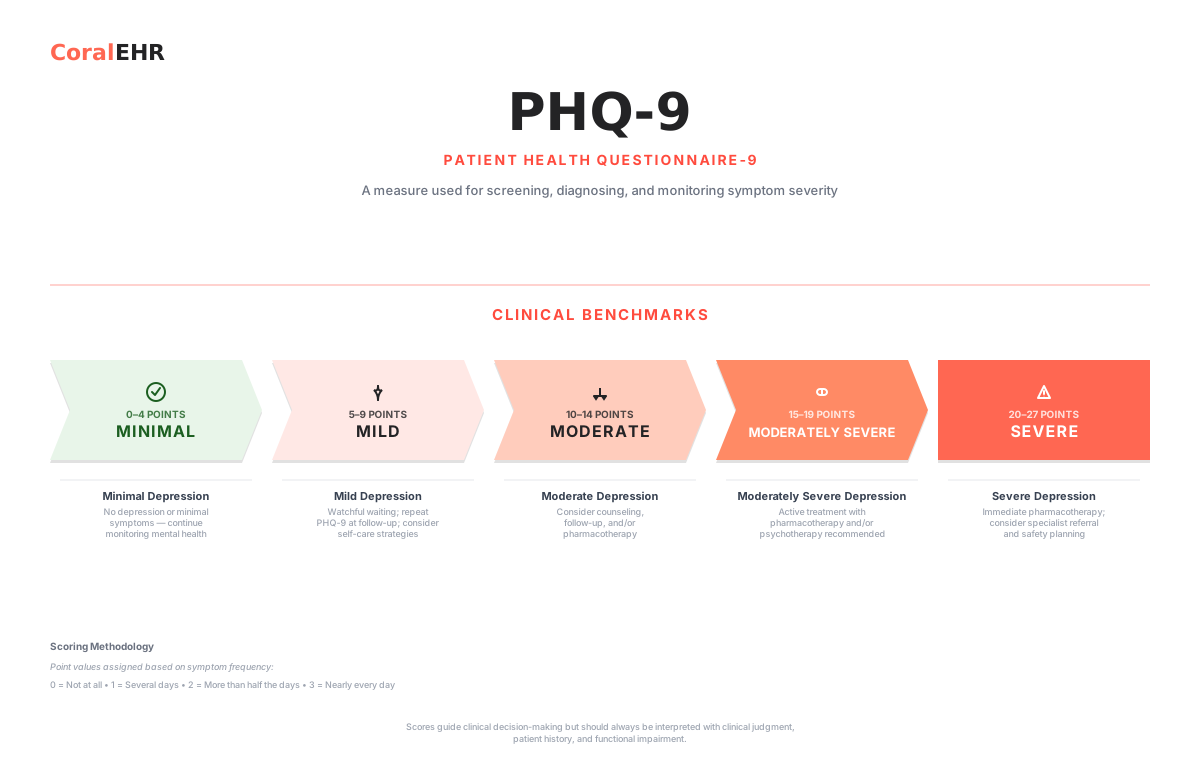
0–4 (Minimal): Little to no depressive symptoms on the total score. Any non-zero answer on item 9 still needs a safety check and is not “no treatment needed.”
5–9 (Mild): Mild symptoms that may be situational. Self‑care strategies, lifestyle changes, or brief counseling may be helpful. Reassess in two weeks.
10–14 (Moderate): Symptoms are likely interfering with your daily life. A comprehensive assessment by a healthcare provider is recommended to discuss treatment options.
15–19 (Moderately Severe): Significant reported symptoms. Discuss this score with a clinician. This page does not prescribe medication.
20–27 (Severe): Very severe reported symptoms or functional impairment. Seek prompt evaluation by a mental health professional. If you have thoughts of self-harm, call or text 988 (988 Suicide & Crisis Lifeline, U.S., 24/7), text HOME to 741741 (Crisis Text Line), or contact your local emergency services right away.
Using your results: Print or download your score to share with your doctor. Keep a record if you're monitoring treatment progress. Remember that the PHQ‑9 is a guide—not a diagnosis.
Frequently Asked Questions
Common questions about the PHQ‑9 assessment.
- A score of 15 falls in the 15-19 (moderately severe) band, suggesting significant depressive symptoms that often warrant active treatment such as psychotherapy, medication, or both. This is a screening result, not a diagnosis, so it points toward a thorough evaluation rather than confirming a condition. A healthcare provider can interpret the score alongside your history and how the symptoms affect daily life.
- No. The PHQ-9 is a screening and severity tool, not a diagnostic test, so even a high score does not confirm major depressive disorder. A clinician makes a diagnosis by considering symptom duration, functional impairment, medical history, and other factors. Use your score as a starting point for a conversation with a healthcare provider.
- Question 9 asks about thoughts of being better off dead or of self-harm, and any non-zero answer warrants a prompt safety review regardless of the total score. A person could have a relatively low total yet still endorse this item, which is why it is checked on its own. If you have these thoughts, call or text 988 (988 Suicide & Crisis Lifeline, U.S., 24/7) or contact emergency services right away.
- The PHQ‑9 has high sensitivity and specificity for major depression when using a cut‑off score of 10 or higher. However, it cannot capture all aspects of depression, and a clinician will consider many factors—including duration of symptoms, functional impairment and medical history—before making a diagnosis.
- Yes. Many therapists and clinicians use the PHQ-9 at intake and throughout treatment to monitor changes in symptom severity. Regular administration (typically every 2-4 weeks) helps track treatment effectiveness, guide clinical decisions, and provide objective measures of patient progress.
- Yes. Clinicians often administer the PHQ‑9 at regular intervals (e.g., every two weeks) to monitor changes in symptom severity and assess whether a treatment plan is effective.
- The standard PHQ‑9 is designed for adults. There is an adolescent version (PHQ‑A) with language adapted for teens. If you’re concerned about a young person, consult a healthcare provider who can recommend an appropriate screening tool.
- A moderate score (10–14) suggests that depressive symptoms are likely interfering with your daily activities and warrant professional assessment. A severe score (20–27) indicates pronounced symptoms and functional impairment. In both cases, talking to a healthcare provider is crucial.
- Yes. After completing the assessment, you can download your results as a professional PDF report that includes your score, severity level, clinical interpretation, and detailed responses. This PDF includes the CoralEHR logo and can be shared with your healthcare provider or kept for your records.
- Your responses are processed entirely in your browser - nothing is transmitted to or stored on our servers, so no protected health information leaves your device. Note: HIPAA compliance is a property of an organization's policies and Business Associate Agreements, not of a website. Clinicians using this tool inside a practice should follow their EHR's HIPAA workflow.
- Answers stay in your browser. We do not store your item responses. Analytics may record that you started or finished the tool (no answers). HIPAA is about a practice's policies and BAAs, not this webpage.
- For ongoing monitoring, taking the PHQ‑9 every two weeks can reveal trends in your symptoms. Avoid taking it more frequently, as the questionnaire asks about a two‑week timeframe.
- Use the PHQ-2 (2 questions, <1 minute) for rapid initial screening in time-limited settings like annual physicals, emergency departments or population health surveys. If the PHQ-2 is positive (score ≥3), follow up with the full PHQ-9. Use the PHQ-9 (9 questions, 2-3 minutes) when you need detailed severity assessment, are monitoring treatment response, or when a patient has already indicated depressive symptoms. The PHQ-9 provides richer clinical information including specific symptom domains (sleep, appetite, concentration) and suicidal ideation, making it more useful for treatment planning. Many clinicians use [PHQ-2](/assessments/phq-2/) for a brief screen and the PHQ-9 for severity and monitoring after a positive screen — not as a confirmatory diagnosis. If anxiety is also a concern, pair the PHQ-9 with the [GAD-7](/assessments/gad-7/) to assess for comorbid conditions.


Stay Updated on Mental Health Resources
Get notified when we add new assessments, research insights, and mental health resources.