PHQ‑2: Patient Health Questionnaire‑2
Answer the two PHQ‑2 depression screening questions, get an instant score, and learn when PHQ‑9 follow-up or clinical evaluation is recommended.
What Is the PHQ-2 Depression Screener?
The Patient Health Questionnaire‑2 (PHQ‑2) is a two-question depression screener based on the first two items of the PHQ‑9. It asks about depressed mood and loss of interest or pleasure over the past two weeks. A score of 3 or higher is commonly used as a positive screen that should be followed by the PHQ‑9 or clinical evaluation.
The PHQ‑2, also searched as PHQ2 or PHQ 2, is designed for rapid first-step screening. It does not diagnose depression, but it can identify when a longer depression questionnaire or conversation with a clinician is warranted.
Evidence & validation: Research demonstrates that a total score of 3 or greater on the PHQ‑2 is the optimal cut‑off for identifying major depressive disorder. In one study, a score of 3 had 82.9% sensitivity and 90% specificity for major depression. Although the PHQ‑2 has sensitivity comparable to the PHQ‑9, it has slightly lower specificity. A positive result is therefore a signal to complete the PHQ‑9 or arrange a clinical evaluation to determine diagnosis and severity.
Why use it? Depression is common yet under‑diagnosed. The PHQ‑2 offers a rapid, easy‑to‑administer screener that can be used in busy clinical settings, online assessments, or self‑checks. It is publicly available and free of charge, and is recommended by guidelines for adults and adolescents aged 12 and older. Because it takes less than a minute to complete, it is ideal for initial screening in primary care, behavioral health, obstetrics, and research settings.
Alternatives: A positive PHQ‑2 should be followed by the PHQ‑9, which provides a more comprehensive assessment and severity score. Other validated instruments include the Edinburgh Postnatal Depression Scale for perinatal screening, the Geriatric Depression Scale for older adults, and the Beck Depression Inventory. These tools may be more appropriate in certain populations.
Important disclaimer: The PHQ‑2 is a screening tool and cannot diagnose depression. A positive screen should always be followed by further assessment. If you have thoughts of self‑harm or suicide, seek professional help immediately. In the U.S., call the 988 Suicide & Crisis Lifeline.
Reference: View the PHQ‑2 scoring guidelines from the University of Washington’s National HIV Curriculum and the PHQ‑2/PHQ‑9 instructions from the instrument developers.
Ready to Begin?
This assessment takes about <1 min to complete. Your responses are private, never stored, and you can instantly download your results as a PDF.
How to Take the PHQ-2 Depression Screener Online
Answer Questions
Complete the assessment honestly based on how you've been feeling
Get Your Score
Instant calculation using clinically validated scoring methods
Download PDF
Save or share your detailed results with your provider
You'll answer two questions about how often you've been bothered by (1) little interest or pleasure in doing things and (2) feeling down, depressed or hopeless over the past two weeks. Each response is scored from 0 (Not at all) to 3 (Nearly every day). The total score ranges from 0 to 6. Completing the PHQ‑2 typically takes less than a minute.
PHQ-2 Scoring Guidelines and Interpretation
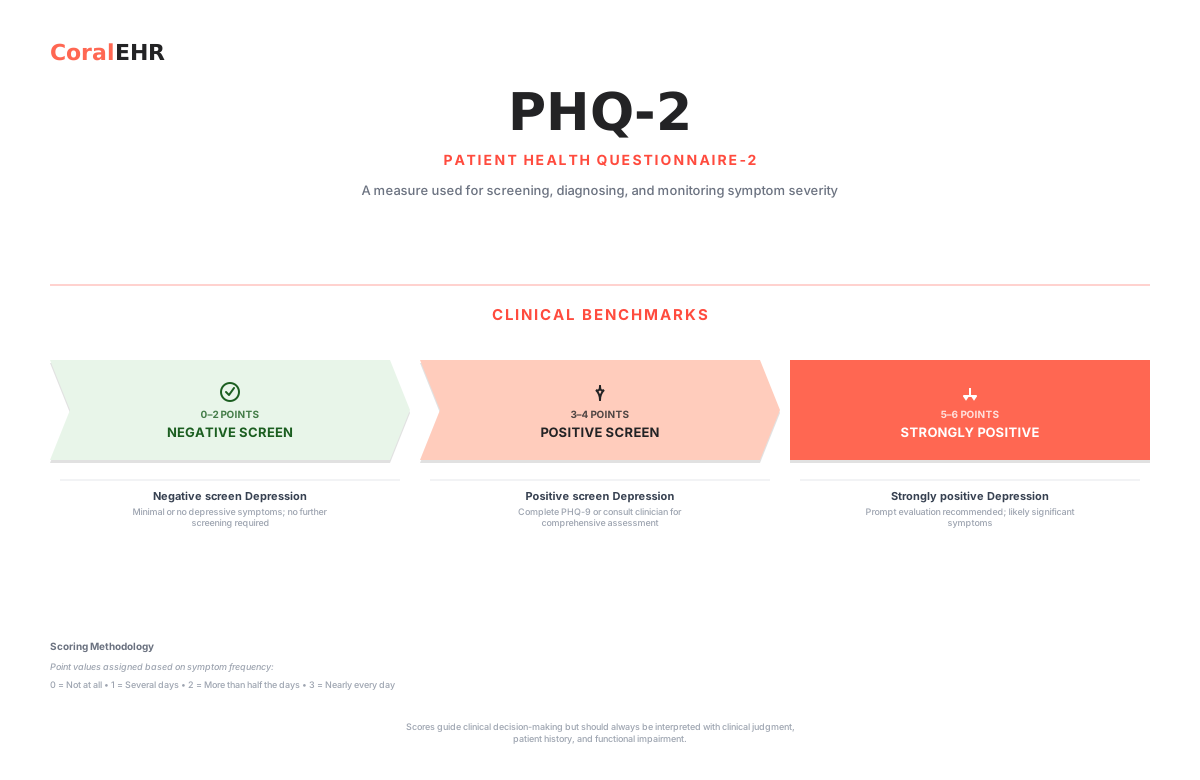
Quick Reference Table:
| Score | Interpretation | Recommended Action |
|---|---|---|
| 0–2 | Negative screen | Monitor periodically; no immediate action needed |
| 3–4 | Positive screen | Complete PHQ-9 or consult clinician |
| 5–6 | Strongly positive | Prompt evaluation recommended |
0–2 (Negative screen): Your responses suggest minimal or no depressive symptoms. No further screening is required unless clinically indicated. Continue to monitor your mood and repeat the PHQ‑2 periodically.
3–6 (Positive screen): A score of 3 or greater is considered a positive screen for depression. This does not mean you have major depression, but it indicates that a comprehensive assessment is warranted. You should complete the PHQ‑9 or speak with a healthcare provider to determine whether you meet the criteria for a depressive disorder. Higher scores (5–6) may indicate more significant symptoms and the need for prompt evaluation.
Using your results: A negative screen can reassure you that depression is unlikely. A positive screen is a starting point for further evaluation. You can download or print your responses to share with your clinician. Remember that the PHQ‑2 is a screening tool and not a diagnosis.
Crisis support: If you have thoughts of self-harm or suicide, seek immediate help. Call the 988 Suicide & Crisis Lifeline or go to your nearest emergency room.
Frequently Asked Questions
Common questions about the PHQ‑2 assessment.
- A score of 4 is at or above the cut-off of 3, making it a positive screen for depression. This does not mean you have major depression, but it indicates that completing the full PHQ-9 or speaking with a clinician is the recommended next step. The PHQ-2 is a first-step screener, so a positive result is a signal for further assessment, not a diagnosis.
- No. A positive PHQ-2 (a score of 3 or higher) only suggests that depression is possible and that further evaluation is warranted. Because the PHQ-2 has slightly lower specificity than the full PHQ-9, a positive screen should always be followed by the PHQ-9 or a clinical evaluation to determine whether a depressive disorder is actually present.
- Scoring is based on the combined total of both items (range 0-6), so a total under 3 is considered a negative screen even if one question is elevated. That said, the PHQ-2 is only a screening tool, and how you feel matters more than a number. If a single symptom such as loss of interest or low mood is troubling you, it is still reasonable to talk with a healthcare provider.
- The PHQ‑2 consists of the first two questions of the PHQ‑9 and is used solely for initial screening. The PHQ‑9, on the other hand, includes nine items that measure the severity of depressive symptoms and can aid in diagnosis and treatment planning. A positive PHQ‑2 should be followed by the PHQ‑9 or a clinical interview.
- The PHQ‑2 is extremely brief and has sensitivity comparable to the full PHQ‑9. In busy settings or for quick self‑checks, it allows you to screen for depression with minimal burden. If the PHQ‑2 is positive, you can then complete the PHQ‑9 for a more detailed assessment.
- A score of 3 or greater is the optimal cut‑off for identifying probable major depressive disorder. At this threshold, the PHQ‑2 has approximately 82.9% sensitivity and 90% specificity for major depression, meaning it correctly identifies about 83% of people with depression and correctly rules out 90% of those without depression. The two questions assess anhedonia (loss of interest or pleasure) and depressed mood—the two core symptoms required for a major depressive episode according to DSM-5 criteria. While some clinicians use a cut-off of 2 to maximize sensitivity, a score of 3 provides the best balance of sensitivity and specificity for most screening purposes. If you score 3 or higher, the next step is typically to complete the [PHQ-9](/assessments/phq-9/) for a more detailed assessment.
- The PHQ‑2 is primarily intended for initial screening. For monitoring symptom changes over time, clinicians typically use the PHQ‑9 because it provides a wider score range and greater sensitivity to change.
- Yes. Guidelines recommend depression screening for adolescents aged 12 and older, and the PHQ‑2 is an accepted first‑step screening tool in this age group. The two questions are worded simply enough for most adolescents to understand. However, younger children (under 12) may require different instruments such as the PHQ‑A (Adolescent version) or the Revised Children's Anxiety and Depression Scale (RCADS). For perinatal depression screening, the Edinburgh Postnatal Depression Scale (EPDS) is preferred over the PHQ-2, as it was specifically designed and validated for pregnant and postpartum women.
- There is no definitive guidance on how frequently to administer the PHQ‑2. A pragmatic approach is to screen individuals who have not been screened previously and to use clinical judgment to determine if additional screening is warranted based on risk factors or emerging symptoms.
- Your responses are processed entirely in your browser - nothing is transmitted to or stored on our servers, so no protected health information leaves your device. Note: HIPAA compliance is a property of an organization's policies and Business Associate Agreements, not of a website. Clinicians using this tool inside a practice should follow their EHR's HIPAA workflow.
- No. Your responses are never saved or sent anywhere. Everything happens on your device, so your privacy is completely protected.
- Yes. After completing the screener, you can download a PDF report that summarizes your responses and explains what they mean. This is helpful for sharing with a therapist or keeping for your records. The PDF includes your total score, severity category and recommended next steps. If you screen positive (score ≥3), consider also completing the PHQ-9 for a more detailed assessment before your appointment, as this will give your clinician more information to guide treatment planning.


Stay Updated on Mental Health Resources
Get notified when we add new assessments, research insights, and mental health resources.